Corporate Event Planning Checklist: 12-Week Timeline
6 min read
A week-by-week corporate event planning checklist for Pakistan: objectives, budget, venue, production, guests and follow-up, from 12 weeks out to the day after.
A corporate event looks simple from the audience: a stage, a host, dinner on time. Behind it are dozens of decisions that each have a deadline, and most problems on the day come from one that was made too late. This checklist breaks the work into a week-by-week timeline you can use for an annual dinner, a conference, a product launch or an awards night anywhere in Pakistan.
The timeline below starts 12 weeks out, which suits conferences, launches and events of a few hundred guests. Six to eight weeks is workable for most smaller corporate events: compress the early steps, but don't skip them.
12 weeks out: define the event before you book anything
Every later decision (venue size, budget, agenda, guest list) depends on these answers, so write them down and get them approved by whoever signs off the budget.
Objective. What should be different after the event? Closed deals, a launched product, a motivated sales team, recognised employees. One main objective keeps the agenda focused.
Audience and headcount. Who is coming, roughly how many, and how many will travel from other cities.
Format. Seated conference, gala dinner, exhibition, workshop or a mix. The format decides the floor plan, and the floor plan decides the venue.
Budget, with a contingency line. Hold back a share of the budget for changes; something always changes.
Date. Check it against public holidays, Ramadan and Eid, your industry's calendar and your guests' travel. October to March is the busy season for venues in Lahore because it overlaps with wedding season, so popular dates go early.
One decision-maker. Name the person who approves changes. Events stall when every decision needs a committee.
10 weeks out: shortlist and visit venues
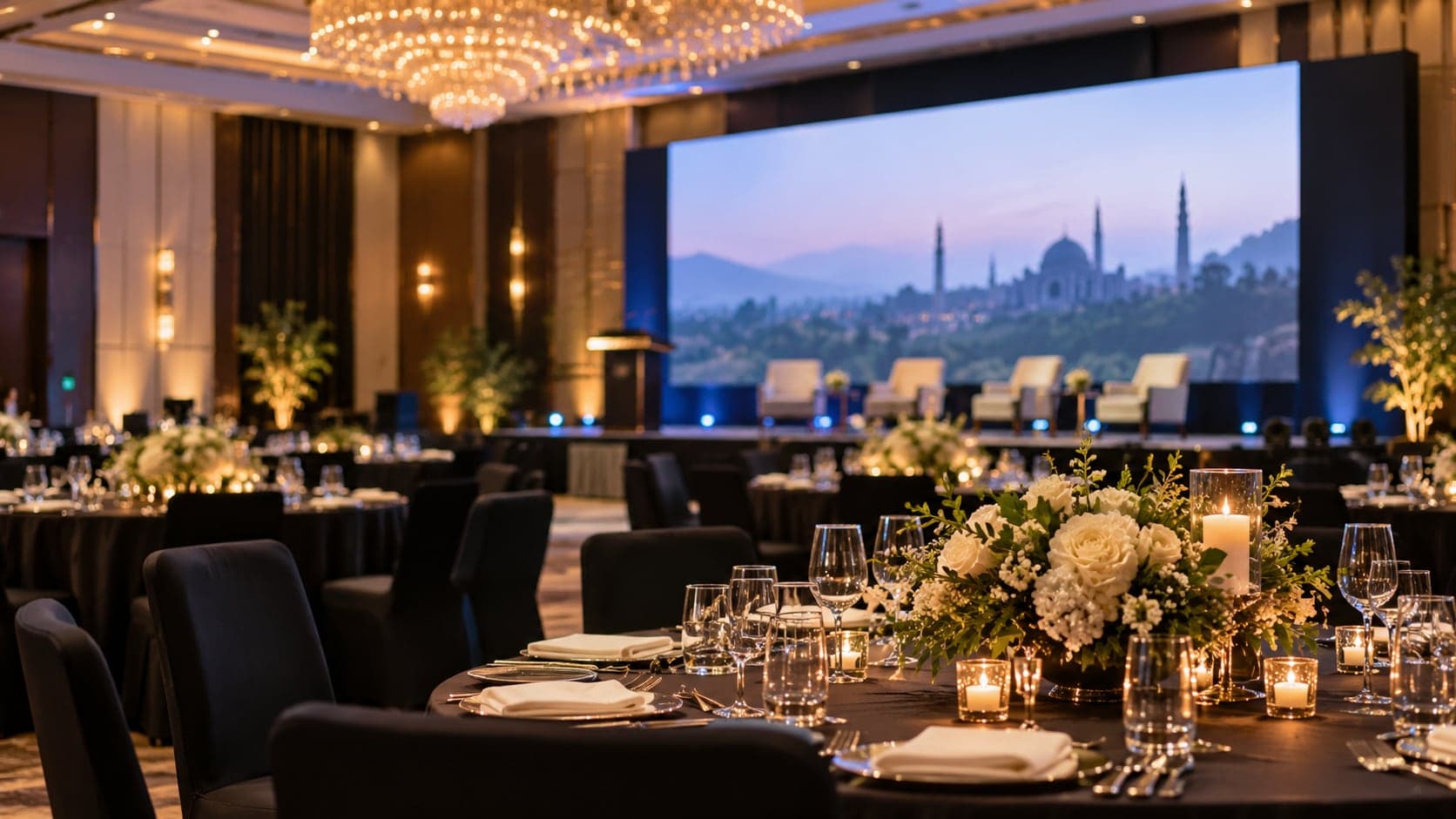
Shortlist three venues that fit your format, then visit them in person. Ask for a floor plan drawn in your layout (theatre, classroom or banquet), not the venue's maximum capacity, which is usually the standing number.
Power backup: generator capacity, what it covers (stage, AV, air conditioning) and who pays for fuel.
Load-in access and times for stage and LED equipment, and the ceiling height for rigging.
In-house AV and catering rules: can you bring your own suppliers, and is there a fee if you do?
Parking, valet and drop-off for the number of cars you expect.
Prayer area, washrooms, step-free access and a separate entrance for VIPs or speakers.
End time and sound limits, and the cancellation and postponement terms.
For a deeper list of questions, see our guide on how to choose an event venue in Lahore, or let our venue sourcing team do the shortlisting.
8 weeks out: agenda, content and production
Draft the agenda minute by minute, including breaks, prayer times and meals.
Confirm speakers, hosts and performers, and agree what each needs (slides, mics, travel, green room).
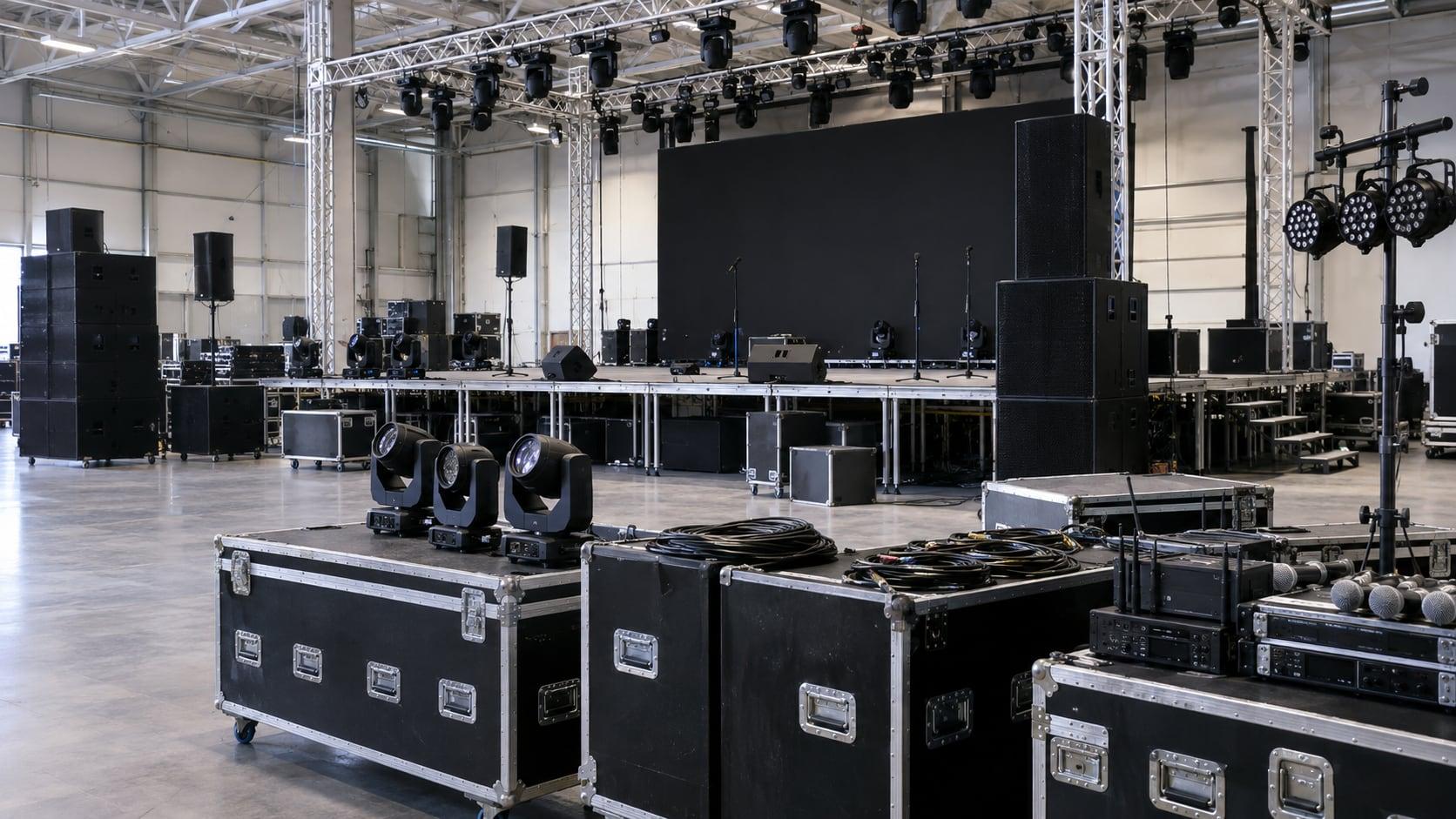
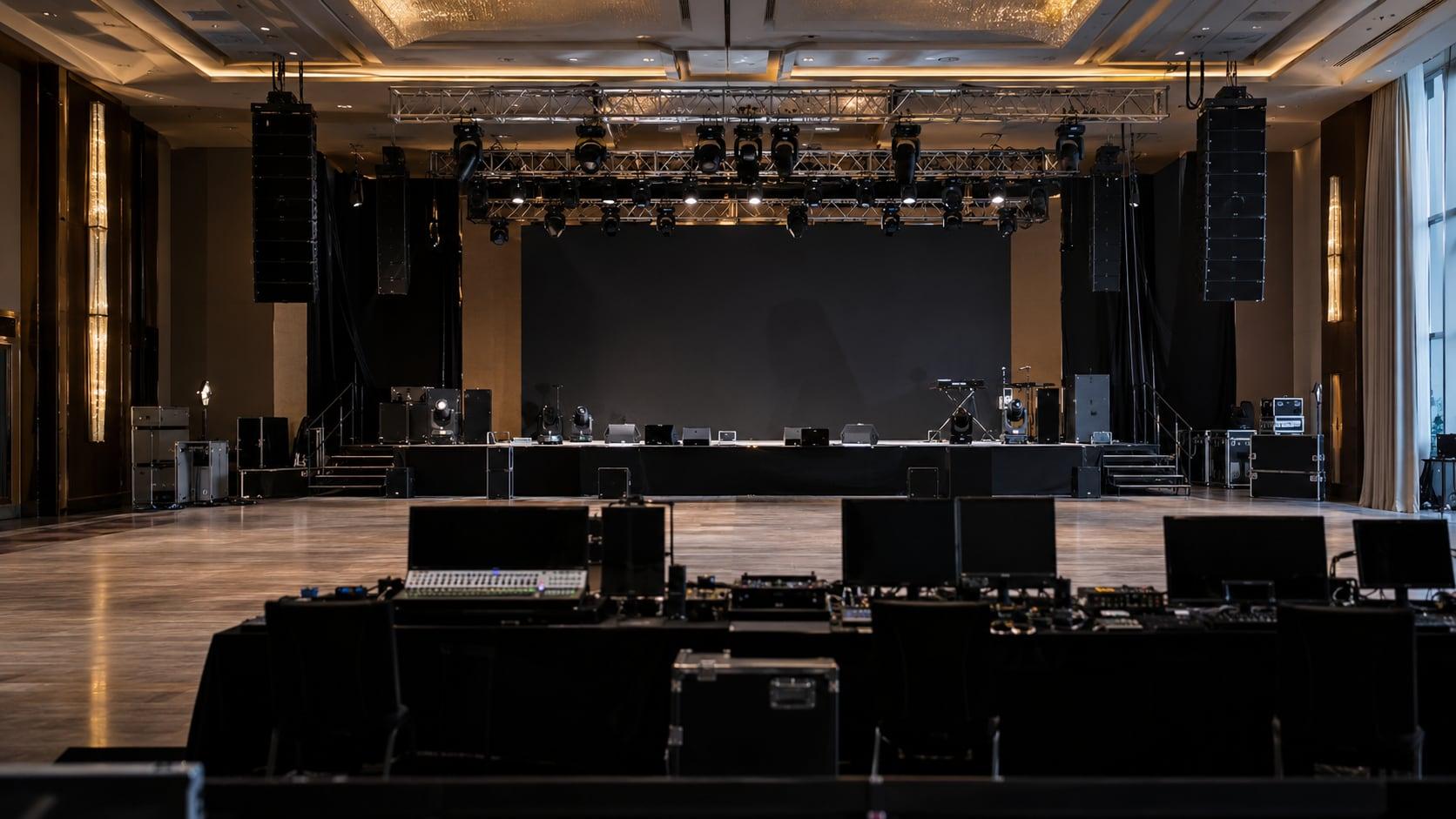
Plan production: stage size, LED or projection, sound, lighting and whether you need a livestream or recording. Our event production page explains what each element involves.
Brief the design work: stage backdrop, entrance branding, signage, name badges and screen templates.
6 weeks out: invitations and registration
Finalise the guest list and send invitations, with a clear RSVP deadline.
Set up registration: an online form or list, and a plan for the registration desk on the day.
Collect dietary needs, accessibility needs and travel details for out-of-town guests.
Book hotel rooms and airport transfers if guests are travelling, and plan VIP protocol.
4 weeks out: lock suppliers and plan for risk
Confirm every supplier in writing: catering, décor, AV, photography and video, printing, transport and security. Each confirmation should state the scope, arrival time, contact person and payment terms.
Agree the menu and do a tasting if the event is large or high-profile.
Write the first draft of the run-of-show: who does what, when, and where.
Write a short risk plan covering power failure, a speaker who cancels, rain for any outdoor part, traffic delays and a medical emergency.
For an outdoor or public event, ask the venue which permissions it needs from the district administration and police, and who is responsible for getting them.
2 weeks out: numbers, scripts and the seating plan
Chase RSVPs and give the venue and caterer your final numbers by their deadline.
Make the seating plan and the badge list.
Finish the host's script, presentations and videos, and send everything to the production team in one shared folder.
Schedule the technical rehearsal and brief every member of staff on their role.
Event week and event day
Load in and run the technical rehearsal with the actual presentations, mics and lighting cues.
Print the final run-of-show and share an emergency contact sheet with every supplier.
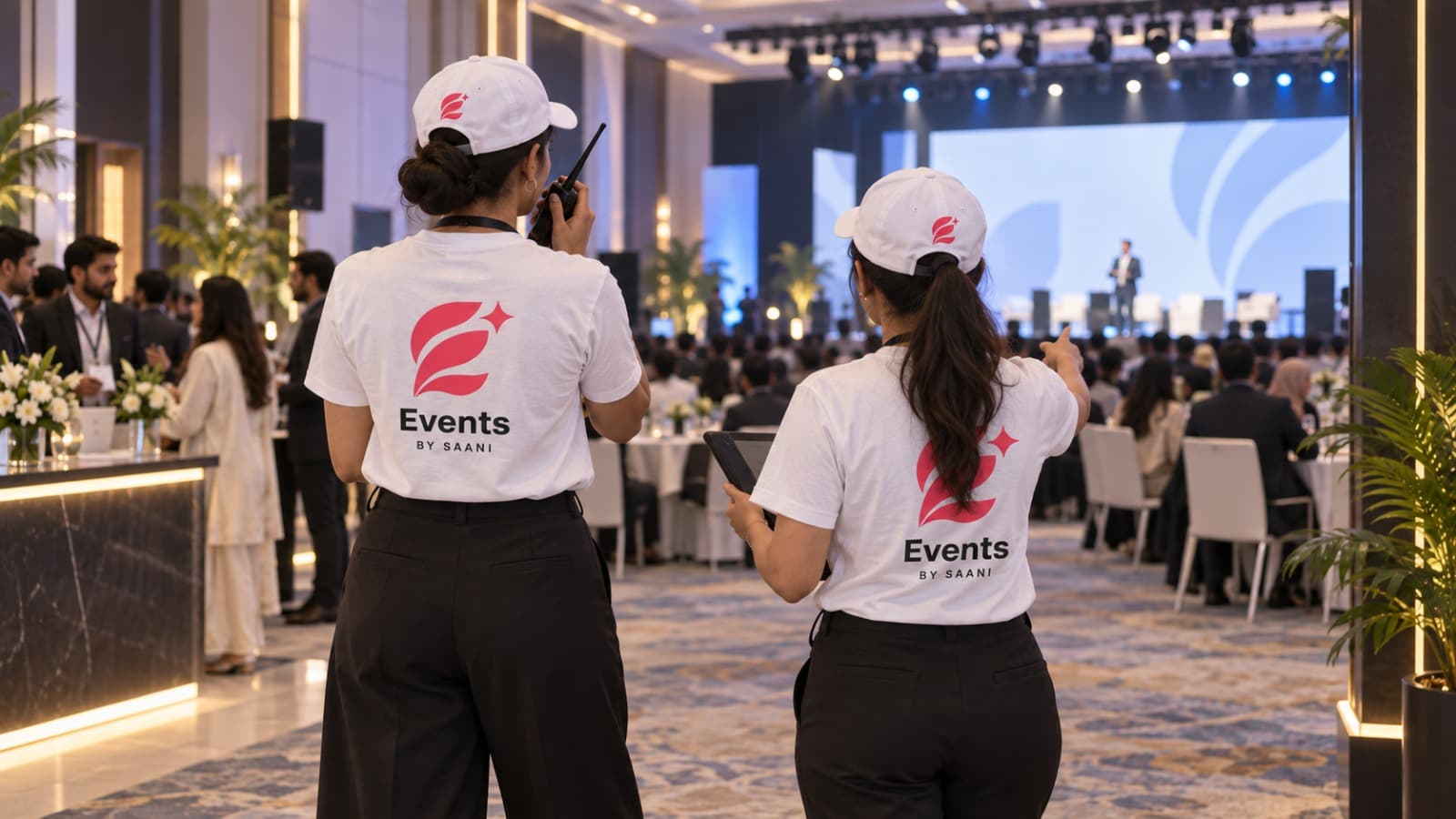
Have one on-site lead who can make decisions, and keep the client contact free to host guests.
Open registration well before the start time, and staff the desk for the arrival rush rather than the average.
The day after: close the loop
Send thank-you messages, with photos or the recording where it helps.
Collect feedback from guests, speakers and your own team while it's fresh.
Reconcile the budget against the invoices.
Hold a short debrief and write down what to repeat and what to change next time.
Where corporate event budgets usually go
Every event is different, but most budgets are built from the same lines. Listing them early stops costs appearing late.
Budget line | What it usually covers |
|---|---|
Venue and catering | Hall hire, food and drinks, service staff, often sold as a per-head package |
Production | Stage, LED or projection, sound, lighting, technical crew, livestream |
Design and branding | Backdrops, entrance, signage, printed material, screen graphics |
Talent | Host, speakers, performers, their travel and hospitality |
Guest logistics | Invitations, registration, transport, accommodation, gifts |
Content capture | Photography, video, same-day edits |
Contingency | Changes, extra guests, last-minute requests |
Quick checklist
Objective, audience, format, budget and date approved
Venue visited and booked, with a floor plan in your layout
Agenda, speakers and production plan confirmed
Invitations sent and registration open
Every supplier confirmed in writing
Run-of-show and risk plan shared with the team
Final numbers, seating plan and scripts done
Technical rehearsal completed
Thank-yous, feedback and budget reconciliation done
Frequently asked questions
How far in advance should a corporate event be planned?
Six to eight weeks is comfortable for most corporate events in Pakistan. Conferences, launches with heavy production and events in the October to March peak season need 10 to 12 weeks or more, because good venues and crews book out early.
What is most often forgotten?
Power backup, prayer timings in the agenda, parking for the number of cars expected, and a written run-of-show that every supplier has seen. Each one is small on paper and very visible on the day.
Should we hire an event management company?
It helps most when the event is large, has heavy production, or your team doesn't have the time to coordinate a dozen suppliers. A good event company gives you one point of contact, one budget and one person accountable on the day. See how we run corporate events and conferences.
Planning a corporate event? Share your brief and we'll come back with a scope, a venue direction and a line-item budget.