What Is Event Production? A Clear Guide
5 min read
What event production includes, how it differs from event planning, who does what on the team, and how to avoid the most common problems on show day.
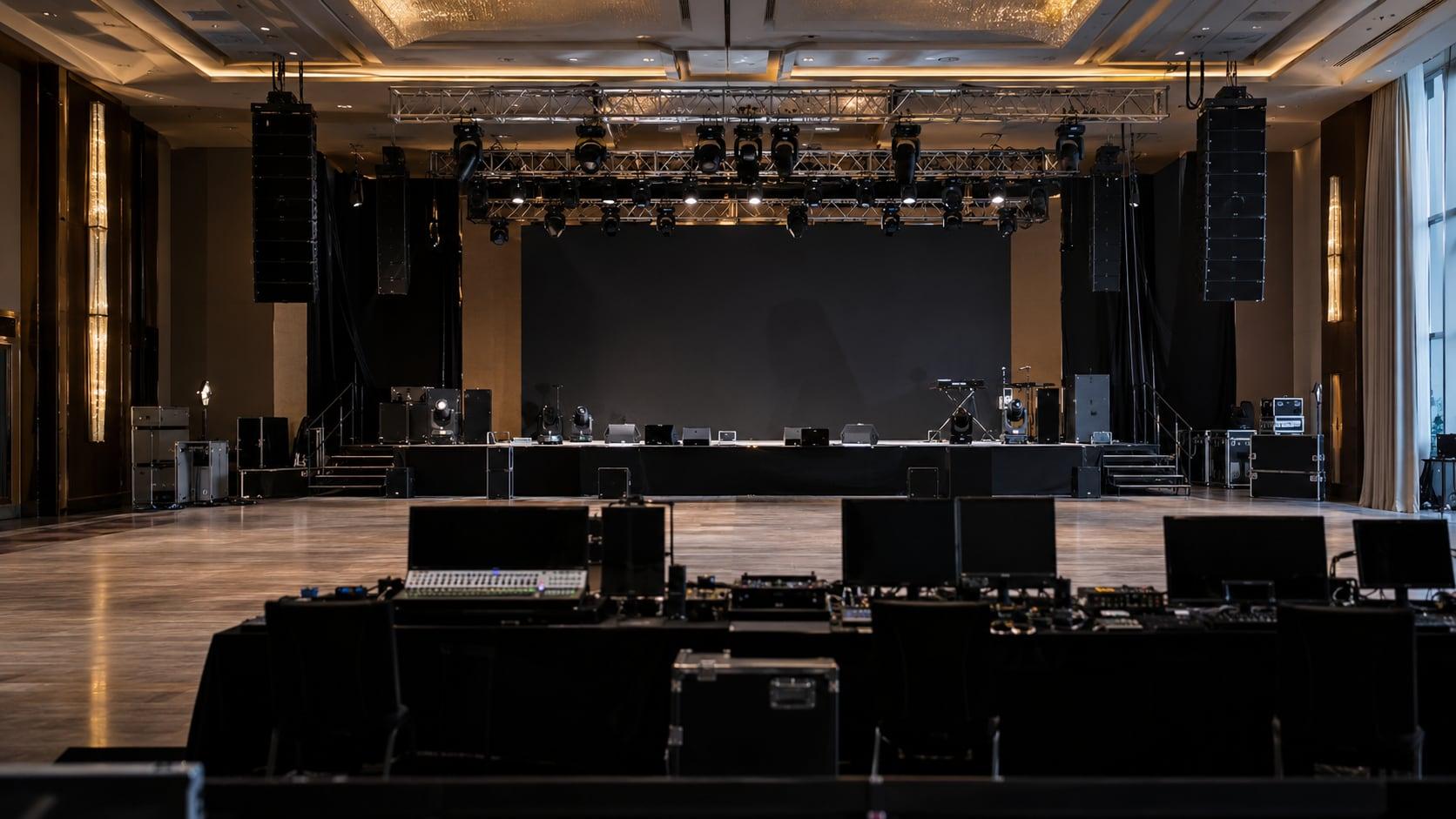
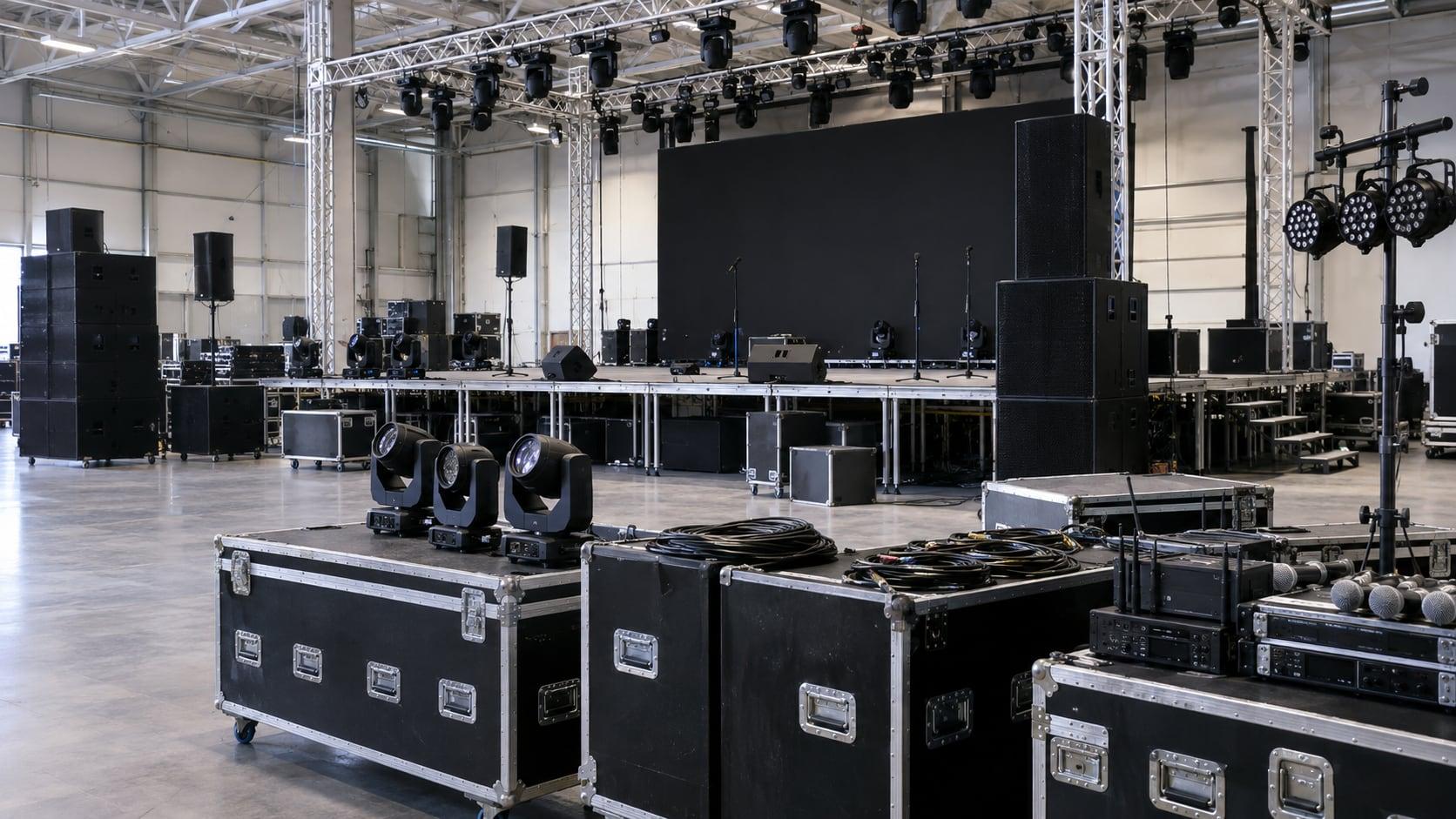
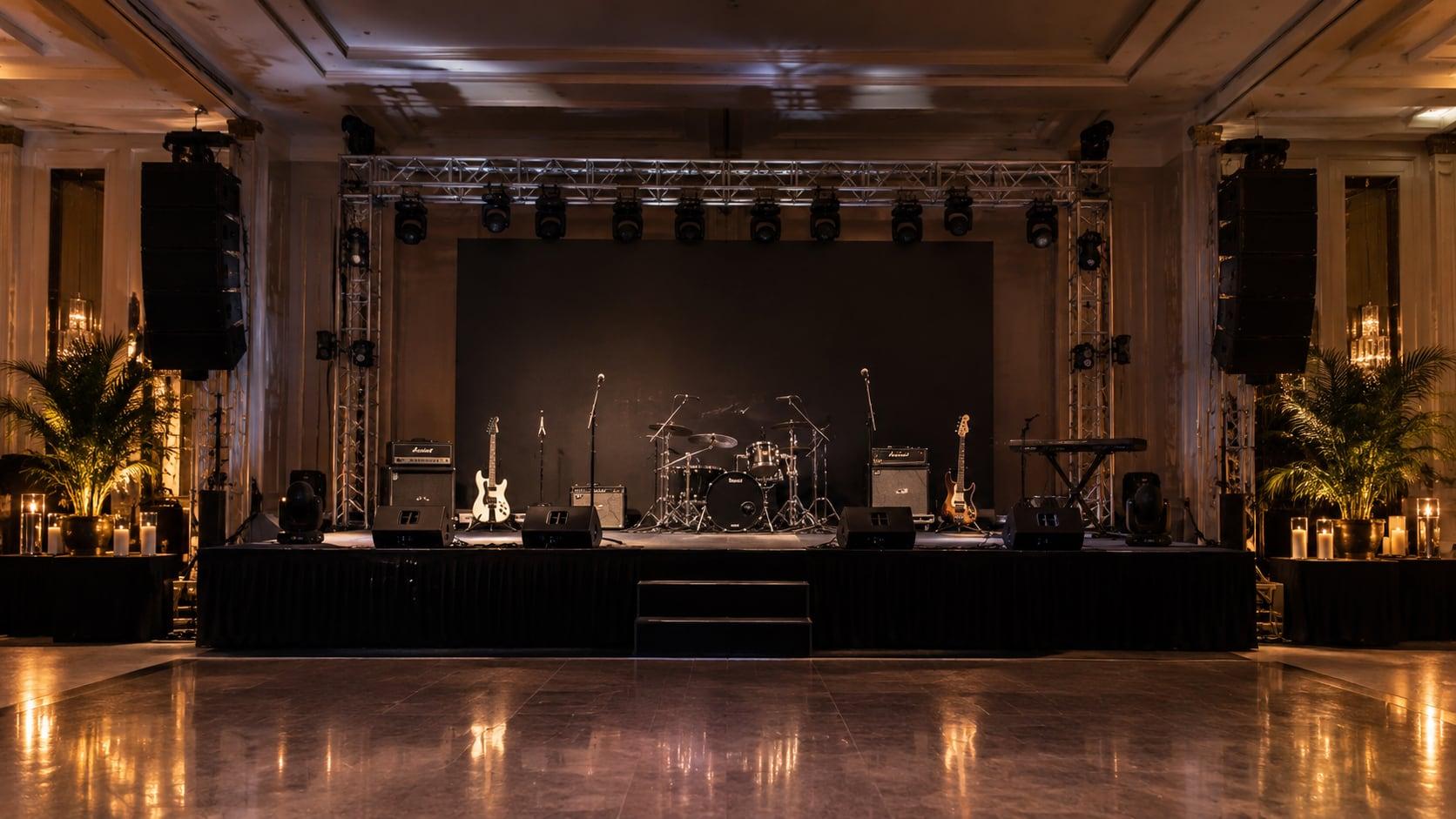
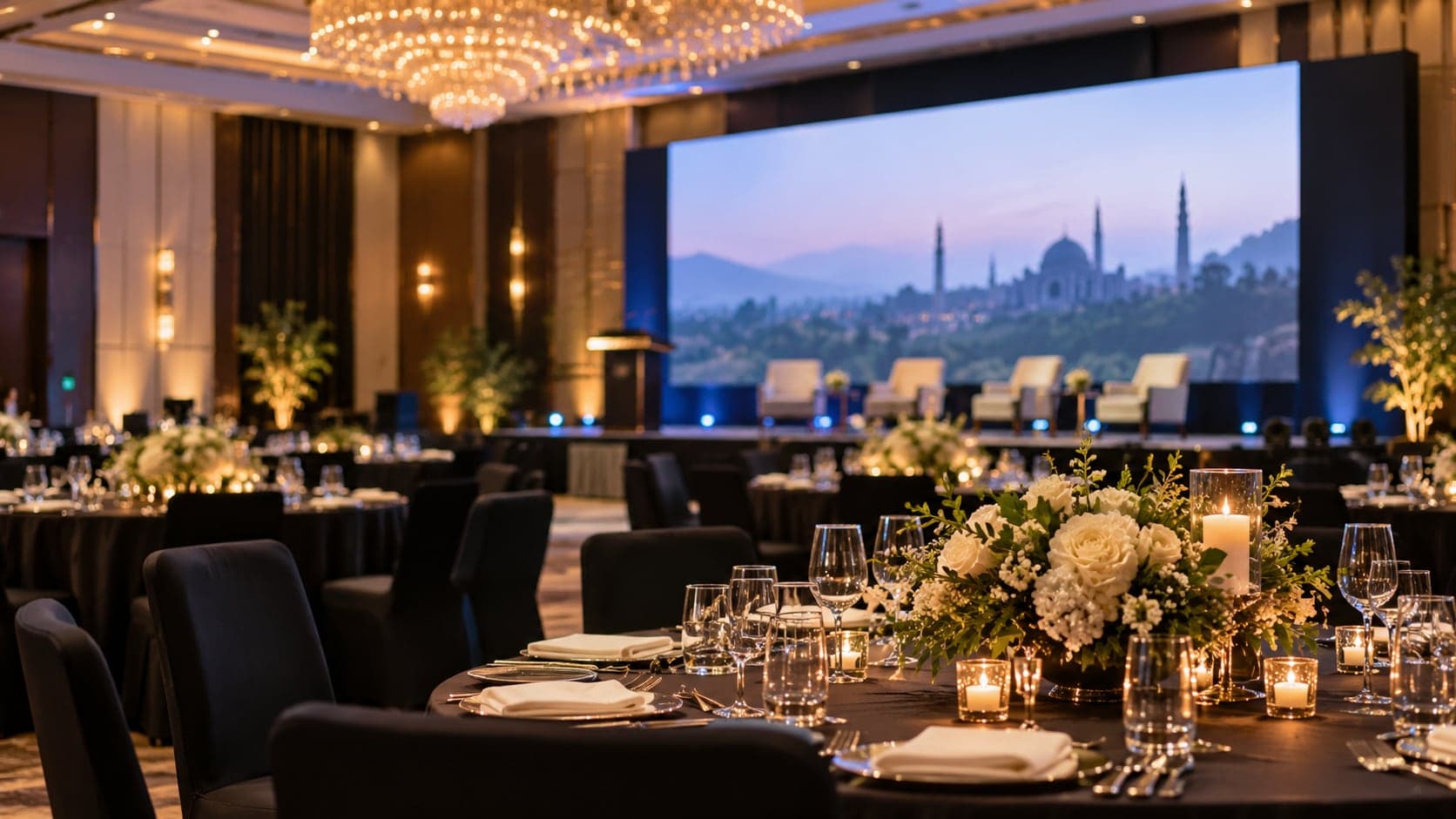
Event production is the technical work that makes an event look, sound and run the way it was planned: the stage, sound, lighting, screens, power and the crew who operate them, plus the schedule that keeps them all in step. Guests rarely notice good production. They notice a mic that fails, a slide that won't load or a speaker standing in the dark. This guide explains what event production includes, who does what, how it differs from event planning and what to prepare before you hire a production team.
Event production vs event planning
The two overlap and are often delivered by the same company, but they answer different questions. Planning makes the event possible. Production makes it work in the room.
Event planning | Event production | |
|---|---|---|
Main question | What are we doing, where, for whom and at what cost? | How will it look, sound and run, moment by moment? |
Typical work | Objective, budget, venue, guest list, catering, suppliers | Stage, audio, lighting, LED, power, rehearsals, show calling |
Key document | Event plan and budget | Run-of-show and cue sheets |
Busiest time | Weeks and months before | Load-in, rehearsal and the show itself |
What event production includes
Stage and structures: the stage, steps, backdrop and the truss that carries lights and speakers.
Sound: speakers sized for the room, microphones, mixing and playback. In a corporate event, clear speech comes before everything else.
Lighting: light on the people on stage so they can be seen and filmed, plus the colour and movement that set the mood. See our event lighting rental guide.
Screens and content: LED walls or projection, confidence monitors for speakers, and the slides, videos and graphics that play on them.
Power: mains and generator supply, distribution and backup for critical systems. In Pakistan, this needs a plan of its own.
Cameras and streaming: recording, live feeds to screens in the room and livestreaming for remote audiences.
Show management: the run-of-show, speaker cues, backstage coordination and rehearsals.
Who does what on a production team
Small events combine these roles and large ones split them further, but the responsibilities stay the same.
Producer: owns the overall vision, schedule and budget for the show.
Technical director or production manager: turns the plan into equipment, crew and a load-in schedule.
Show caller: calls every cue during the live event, telling sound, lighting and video exactly when to act. Think of a conductor for the crew.
Stage manager: runs the stage and backstage, and gets each speaker or performer ready and on at the right moment.
Audio engineer, lighting operator and video operator: run their own systems on cue.
Three documents that keep a show on track
Run-of-show
A timed script of the entire event, from doors opening to the last guest leaving. An agenda tells guests what will happen. A run-of-show tells the crew exactly when and how it happens, and who is responsible.
Cue sheet
A more detailed list for one department, such as lighting or video, that follows the run-of-show's timeline. For example: "Walk-in music fades, house lights down, opening video plays."
Floor plan and stage plot
Drawings showing where the stage, screens, speakers, control desk and cables go, and what's needed on stage for each performer. They're also how you confirm that the setup fits the venue before anything arrives.
How event production works, step by step
Brief. Share the date, venue, guest count, agenda and references for how it should feel.
Site visit. Check ceiling height, rigging points, load-in access and power.
Technical plan. Choose equipment for the room, draw the layout and agree the budget.
Content and cues. Collect presentations and videos, and write the run-of-show.
Load-in and testing. Install and test every system, with time to fix problems.
Technical rehearsal. Walk through the show cue by cue, then update the run-of-show with what changed.
Show. The show caller and crew run the event, with backups ready.
Load-out. Remove everything within the venue's agreed time.
Common production problems, and how to prevent them
Problem | Prevention |
|---|---|
Speeches can't be heard at the back | Speakers sized and placed for the room, tested from the back row, with a spare mic ready |
Presentation won't play or looks wrong | Collect files early in the right screen ratio, test on the actual system, keep a backup copy |
Power cuts out mid-show | A generator plan for critical systems, with its load calculated in advance |
Speaker's face is dark on the video | Dedicated front light on the stage, checked on camera during rehearsal |
Long, awkward pauses between segments | A written run-of-show, a show caller and a full rehearsal |
Frequently asked questions
Does a small event need event production?
It needs less of it, not none. If people need to hear a speaker or see a screen, someone should plan and test that. A small event may only need a good sound setup and one technician.
Can we use the venue's in-house AV?
Often, especially for meetings and simple presentations. Check what's included and test it on your site visit. A large stage show, LED wall or livestream usually needs more than a venue's standard setup.
How early should we book a production team?
Bring them in as soon as the venue is shortlisted, so they can check it before you sign. Our corporate event planning timeline shows where production fits, about eight weeks before the event.
Is it better to rent the equipment or hire a production company?
Renting suits you if you already have someone to run it. A production company takes responsibility for design, equipment, crew and the show itself. Our stage and sound system rental guide covers what to check if you're renting.
Planning a show? See our event production services and equipment rental, or send us your brief.